





Resolution, our new short documentary with Acsys, follows a single coin from the first mark in Carveco Pro to a laser-engraved die. But its story starts more than a thousand years ago, here in Warwick.
Coins tell stories
A coin has always been more than currency. Commemorative coins mark moments, celebrate people and places, and carry a story in a few square centimetres of metal. So when we set out to make a coin with our partners at Acsys, we started by looking for a story worth telling.
We didn’t have to look far. Warwick, where Carveco is based, was once home to a medieval mint. Records suggest coins were struck here from the reign of Æthelstan in the 920s until around 1150, under King Stephen. Nobody knows exactly where the mint stood, and excavations have never found it, but its coins survive.
Heritage and Culture Warwickshire kindly brought two of them out of storage for us: a coin of Edward the Confessor (1042–1066) and one of William the Conqueror (1066–1087), both struck in Warwick. Up close, they showed us how far coin making has come, and how little the reason for it has changed.
Warwick is still part of that story. Mints around the world design their coins in Carveco, and we’re based in the same town where those medieval moneyers worked. So the coin’s motto wrote itself: In the footsteps of Warwick’s medieval coinmakers.
Same craft, new tools
That idea runs through the whole project. The moneyers who worked in Warwick a thousand years ago and today’s coin designers want the same thing: to put art and a story into a small, permanent piece of metal. The artistry hasn’t changed. The technology has.
“With my background as an engraver myself, I know how important it is to respect the art and keep the integrity of the artist’s idea.”
— Alexander Aminidis, Head of Global Mint & Print, Acsys Lasertechnik GmbH
The coin was designed to show how far that process has come, and what becomes possible when every tool in it works together: sculpting, relief generation and latent imaging, all in a single design.
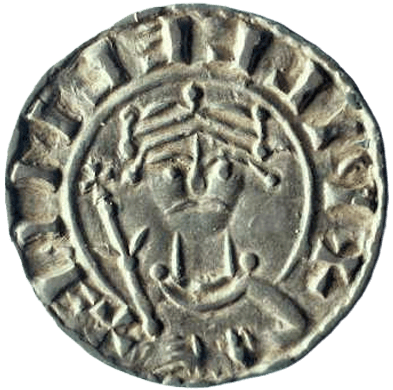
Then: a penny of William the Conqueror (1066–1087).

Now: the Resolution coin, designed in Carveco Pro.
Designing the knight
On one side stands a knight. Every fold of his armour, every link of chainmail and every line of his face was sculpted with Carveco Pro’s sculpting tools, while the Shape Editor turned flat vectors into precise 3D forms, with full control over profile angle, height and scale.
“You can smooth surfaces, add detail, shape and refine just like a traditional engraver would, but with precision control and the ability to undo and iterate instantly.”
— Leighton Ashcroft, Senior Technical Manager, Carveco

Sculpting the knight's face in Carveco Pro.
Behind him is the Sheldon Tapestry, which we first saw on our visit to Heritage and Culture Warwickshire. Over 400 years old, it’s the only surviving complete map from a rare set of four. We took the area around Warwick, still labelled “Warwicke” in its original spelling, and turned it into relief with Image to Relief, one of the Carveco AI tools, then refined it by hand with the sculpting tools. From a five-metre tapestry to detail measured in microns.
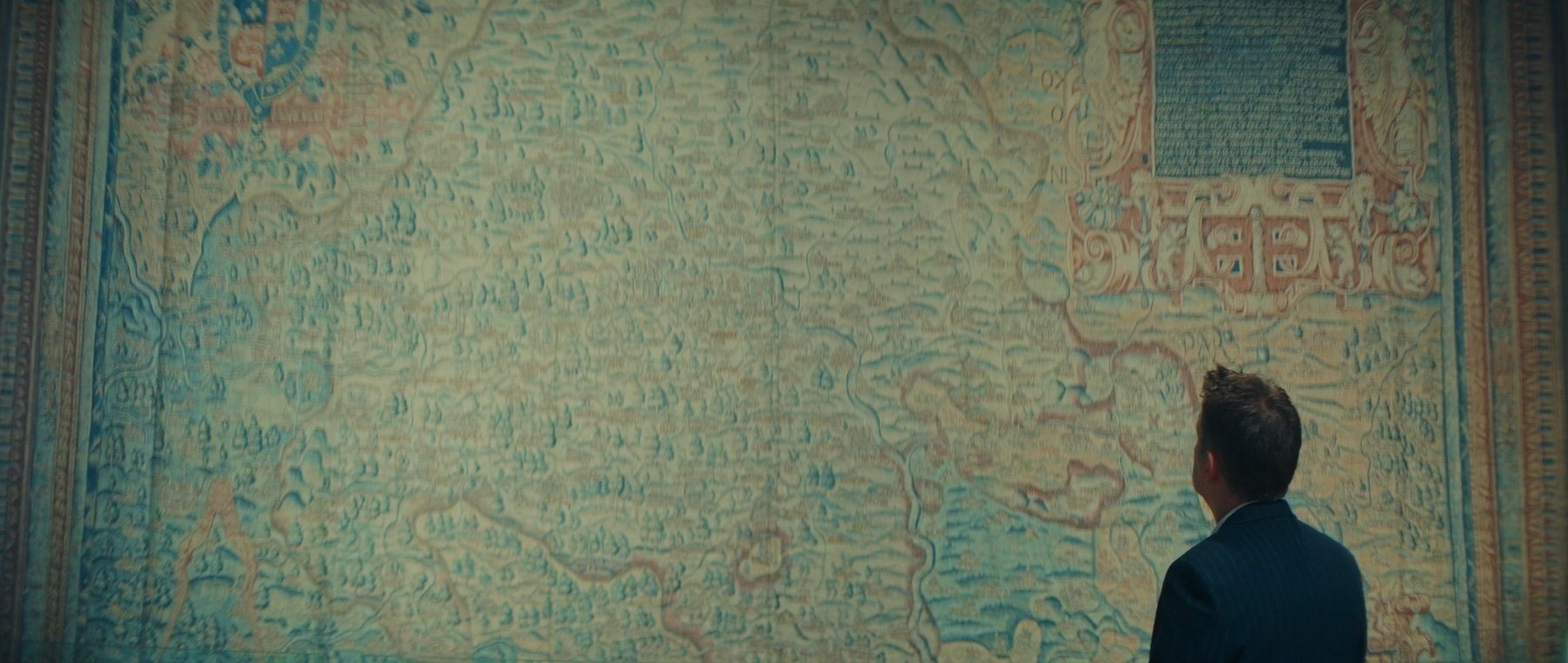
The Sheldon Tapestry at Heritage and Culture Warwickshire.
The other side carries a latent image. Using the Latent Image tool’s four-face mode, we assigned a different logo to each face: the Carveco logo, the Carveco C icon, Acsys and Spaleck. Tilt the coin, and each one appears in turn.
Before anything left the software, we ran height and gradient analysis on the relief. Height analysis colour-codes anywhere that exceeds production constraints, and gradient analysis flags angles that could cause tearing or splitting during striking. Problems are solved on screen, long before they reach the press. Even the smallest lettering stays crisp and readable.
From software to steel
When we export from Carveco, nothing is left open to interpretation.
“We’re not just sending a drawing for someone to work with. We’re sending a complete specification: every depth, every tolerance, every surface defined.”
— Leighton Ashcroft, Senior Technical Manager, Carveco
Carveco and Acsys have developed a direct interface between the design software and the machining software, so the die Acsys produces is exactly the design we created. Their Ultra Short Pulse Femto laser technology engraved it into hardened steel, holding every detail of the chainmail. Acsys also used their patented Pulse Forging technique, which uses the laser to create a smooth, polished finish, on the cross on the knight’s sword handle. And because a laser doesn’t wear, break or bend, the results stay consistent from start to finish.
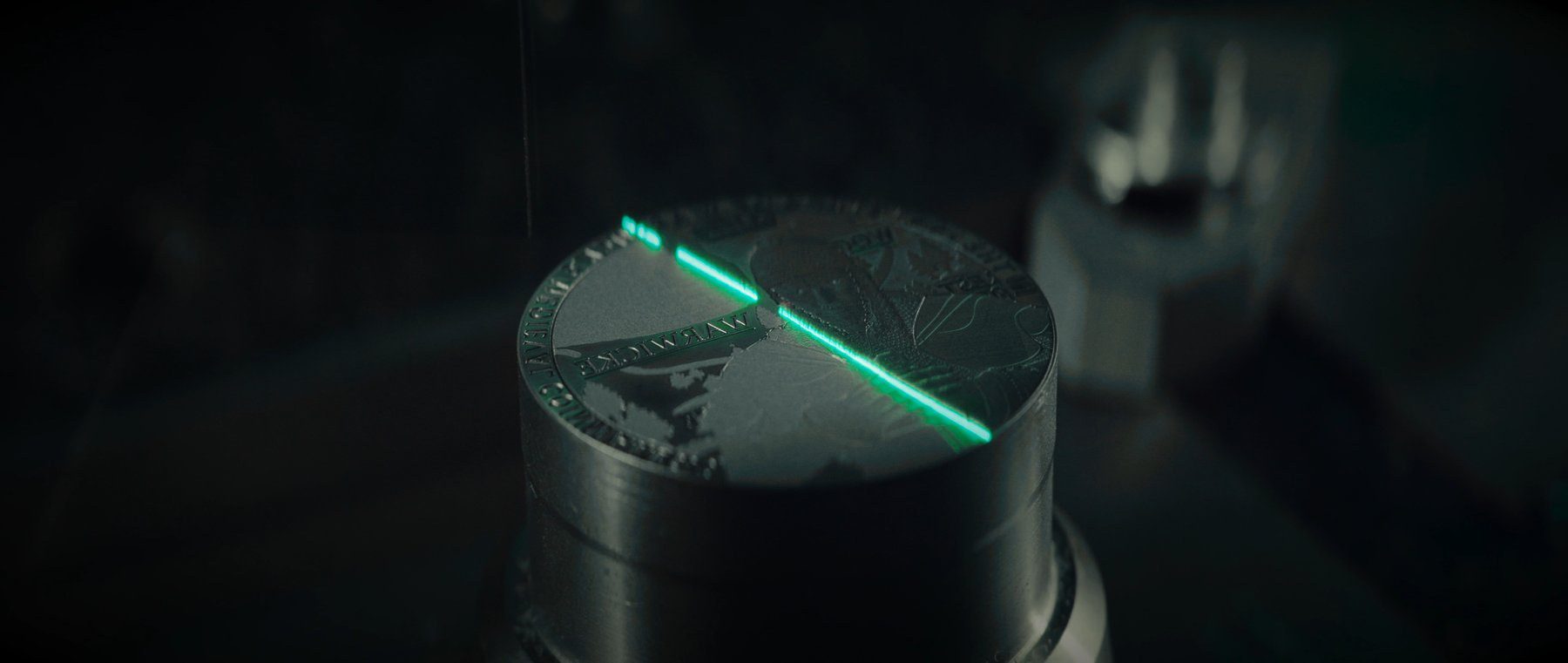
The die under the Acsys laser.
“Good manufacturing starts with design. Without a perfect, beautiful design with all the fine details that everybody would like to appreciate, we wouldn’t be able to engrave anything nicely.”
— Alexander Aminidis, Head of Global Mint & Print, Acsys Lasertechnik GmbH
The finished dies then went to the Commonwealth Mint, where the coins were struck.
Small, but permanent
Precision has always been about closing the gap between what was intended and what was made. Warwick’s medieval moneyers worked with hand-cut dies and hammers. We work with sculpting tools, AI and femtosecond lasers. But the intent hasn’t changed: to leave something of ourselves in what we make, on a canvas small enough to hold in your hand.
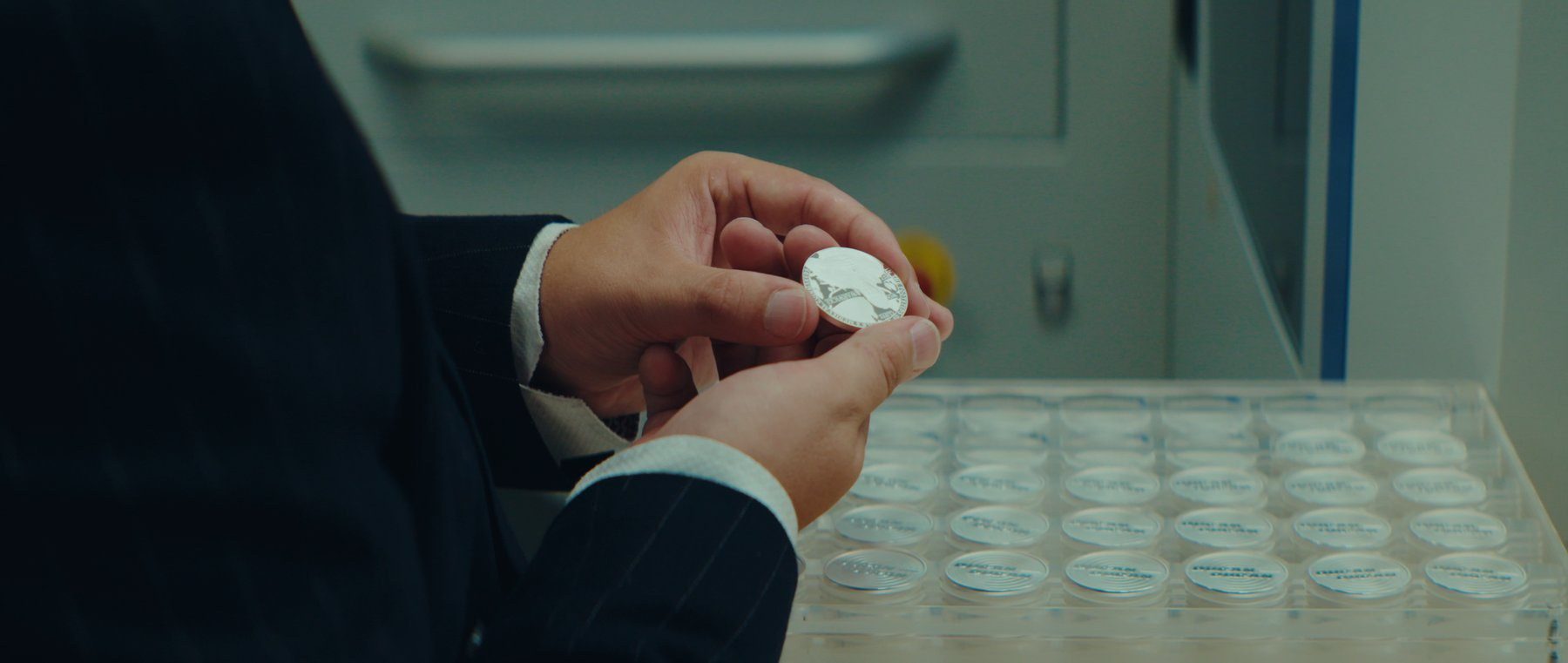
The finished coin.

Resolution was made in partnership with Acsys. With thanks to Spaleck, the Commonwealth Mint and Heritage and Culture Warwickshire.
